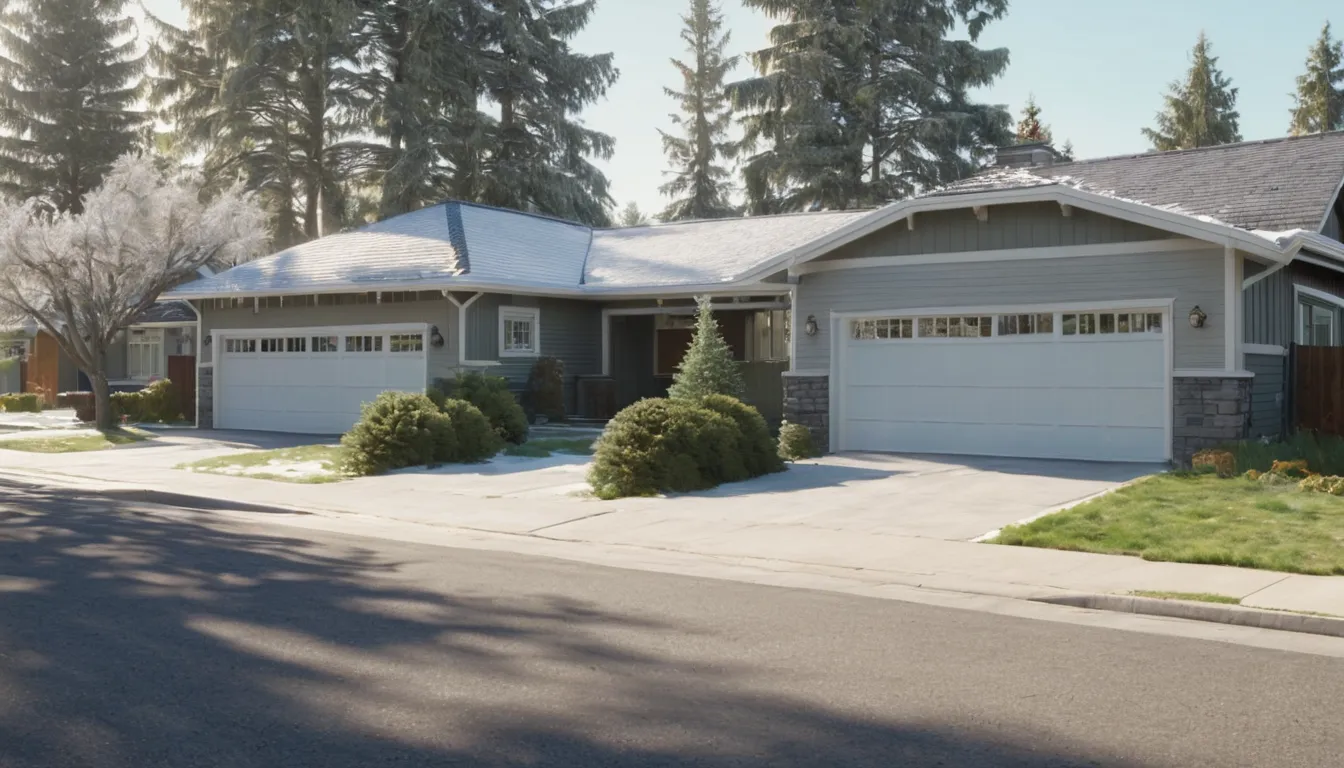
Need garage door spring repair in Aurora?
Tell us what your garage door is doing. Request an estimate and a local provider in our network will follow up with next steps.
No obligationRequest an estimate today
A loud bang from the garage, then a door that will not lift. That is often a broken spring. It feels scary, but it is a common problem, and it can be fixed.
Percentagechaos Garage Doors is a referral service. We do not do the repair. We help you understand your options first. Then we connect you with an independent provider in our network who can look at the door and give a written quote. Springs are under heavy tension, so this is work for a trained pro. You can request an estimate online, or Request a callback to check provider availability in Aurora. Know, then choose.
That bang you heard was likely a spring letting go. It is a stressful moment, especially if your car is stuck inside. The good news is that a broken spring is a well-known problem with clear fixes. You do not need to decide everything today. You only need to take one calm step.
A door with a broken spring can be heavy and unpredictable. Keep it simple:
That is all. The rest can wait for a pro.
Sometimes the signs are loud. Sometimes they are quiet. Look for these:
If you see two or more of these, a spring is a likely cause. A provider can confirm it.
Most doors use one of two spring types. Knowing which one you have helps you understand the quote.
These sit on a metal bar above the door. They twist to lift the weight. They are common on newer homes and heavier doors, and they tend to last longer.
These run along both sides of the door, near the tracks. They stretch and relax as the door moves. They are common on older bungalows and ranch homes. They usually need safety cables, so ask about those.
A spring holds a lot of stored force. If it slips, it can cause a serious injury. The bars, winding tools and sizing also matter. A spring that is the wrong size can make the door slam or rise crooked. A trained provider has the right tools and knows the safe order of steps. This is one repair where paying a pro is simply the safer choice.
Every provider works a little differently. Here is a typical visit.
The provider checks the spring, cables, rollers and hinges. They explain what they find before any work starts.
Most providers replace both springs together, since the second one is often close to failing too. Then they balance the door so it lifts evenly.
The provider runs the door several times. They may also check track alignment and add lubricant to moving parts.
A standard spring is built for roughly 10,000 open-and-close cycles. A high-cycle spring is rated for more. If your family uses the garage as the main door, a high-cycle option may last longer. It costs more up front, so ask the provider to explain both choices in writing.
Cold winters with deep frost make metal stiff and brittle. Hot, humid summers can speed up rust. Heavy storms may also knock a door off its path. If your door is old, the weather may have worn the springs down. A provider can tell you if the problem is age, rust or something else.
A good provider is happy to answer these. Write down the answers.
If the door will not open and you need emergency garage service, Request a callback to check provider availability. Many providers can respond quickly, but timing depends on the provider and the day.
A broken spring does not mean a new door. It also does not mean a big, scary bill. Sometimes a spring fix is all you need. Other times, a provider may suggest a new garage door opener if the old one is worn out. Either way, you get the facts before any work begins.
The provider inspects springs, cables, rollers and hinges, then explains what they find in plain words.
Worn or broken springs are swapped out and sized to match your door's weight.
The door is tested so it lifts evenly and stays put.
Tracks are looked over and adjusted so the door rolls smoothly and quietly.
Prices vary by door size, spring type and the provider. These are typical U.S. ranges, not quotes. Always ask for a written quote that lists parts and labor before you agree to any work.
| Item | Typical range | Notes |
|---|---|---|
| Single torsion spring | $150 – $350 | Parts and labor, standard door |
| Pair of torsion springs | $200 – $450 | Often advised so they wear evenly |
| Extension springs, pair | $100 – $250 | Safety cables may add cost |
| High-cycle spring upgrade | $250 – $600 | Rated for more open-and-close cycles |
| Cable replacement | $100 – $250 | Often done at the same visit |
| Track alignment | $100 – $250 | Needed if the door rolls crooked |
Keep clear of the door and springs, keep kids and pets away, and leave the opener alone.
Fill out the short form, or Request a callback to check provider availability near you.
A provider inspects the door and explains spring types and costs in writing.
You pick the option that fits, and the provider schedules the work.
You learn your choices and likely costs first, so nothing feels rushed.
We connect you with local providers in our network who do the actual repair work.
Providers can look at your door and give a written quote before you decide.
We explain springs, parts and terms in simple words, with no pressure.
Tell us what your garage door is doing. Request an estimate and a local provider in our network will follow up with next steps.
No obligationIt is not safe to try. The door can be very heavy, and it may drop suddenly. Pull the release only if you must get a car out, and ask someone to help. Then let a provider inspect the door.
Standard springs often last around 10,000 cycles, which may be seven to ten years for many homes. Heavy use, rust and cold weather can shorten that. High-cycle springs may last longer.
Many providers suggest replacing both. Springs wear at about the same rate, so if one has failed the other may be close behind. Ask the provider to explain the choice and list it in the quote.
Tell us what your garage door is doing. Request an estimate and a local provider in our network will follow up with next steps.
No obligation